“If your feminism doesn’t include trans women,” a tweet from music journo Emma Wilkes informed us, “It’s not feminism.”

Now, I’d be the first to admit that my knowledge of feminist theory wouldn’t fill a Show Me Your Tits! baseball cap, but I can read. For example, 5 years ago I read the Cambridge University Students’ Union Women’s Campaign’s guide to trans-inclusive feminism. The guide has now been removed from the campaign’s website, presumably for excessive saying-the-quiet-bit-aloud, and replaced with guides on Trans Inclusion and How to Spot a TERF (plus a guide to support for student sex workers… you know, for the ladies) but it still offers a fascinating insight into just what trans inclusion does to feminism.
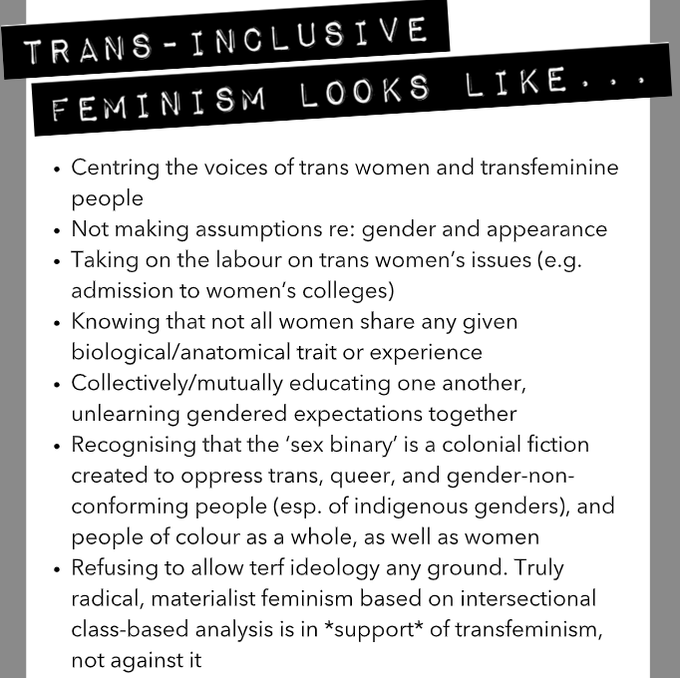
The very first point concedes that trans-inclusive feminism is not content with being merely trans-inclusive, it must be trans-centric. This pairs nicely with the second point, reminding us that trans activists have fought furiously against the notion of passing – looking like a biological woman – being any sort of barrier.
In other words, this version of feminism is one that promotes any man who says they’re a women over people who merely are actual women, even if their commitment to feminism doesn’t extend as far as shaving their beard off.
Not that the non-men women have nothing to do in this new, exciting feminist movement. Just look, they can fight for more rights for men who say they’re women (point 3), teach other women to respect the men (point 5), or just attack women who won’t believe the men are who they say they are (final point).
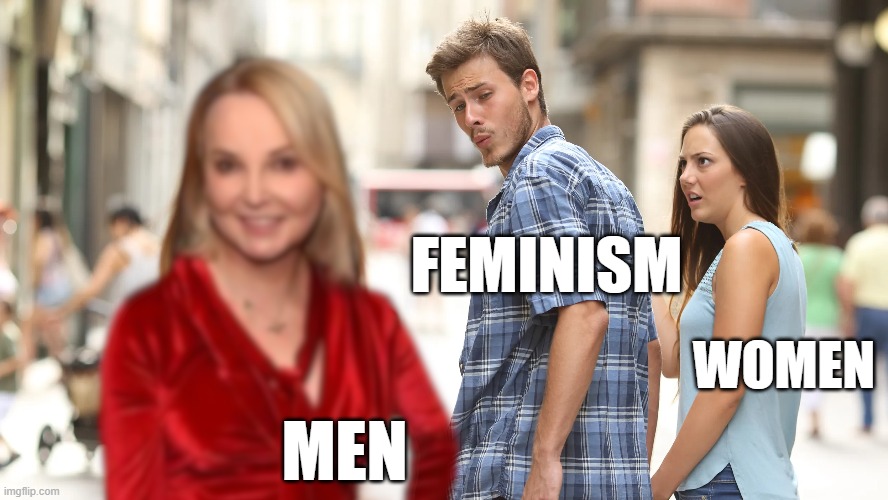
Two mysteries remain. Firstly, who wrote that guide to trans-inclusive feminism? It’s easy to assume it was a transwoman, keen to advance their own interests, but Emma’s tweet – delivered on International Women’s Day – reminds us that there are plenty of women who are desperately eager to advance men’s interests over their own.
The more enduring question, however, and one that’s bothered me for five years, is why it didn’t end then. Why anybody with any desire to claim to be a feminist didn’t read that list of demands and immediately see that they were dealing with a wholesale attempt to take over the political structure of women helping women.
Unfortunately, Emma turned off replies to her tweet, so I can’t ask her. That’s fair enough, feminism shouldn’t be about meeting the demands of men, I’m just not sure anybody’s explained that bit to Emma.
 Excel Pope