In defence of some guy

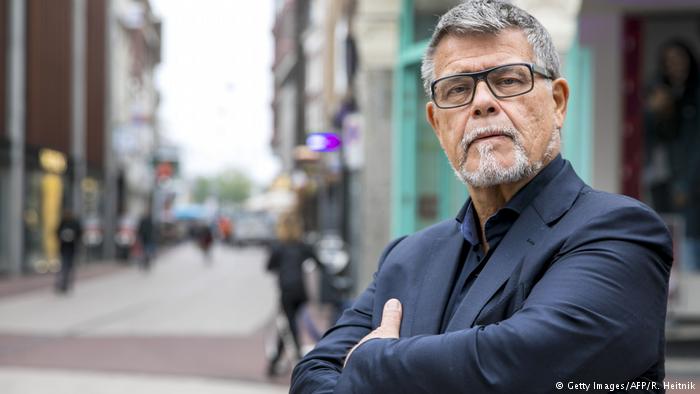
The most talked about story over the past week has been that of Emile Ratelband, a Dutch man who wishes to legally change his age from 69 to 49.

some guy
Some guy, pictured yesterday

For expressing this simple wish he has been denounced and pilloried, with support coming from no quarter – surely making his minority the most oppressed one.

Harshest of all have been the attacks from middle-aged guys, who you’d expect would instinctively support one of their own, out of basic kinship. These men, these Chronovariable Unbelieving Men (CUMs), seem to wallow in their bigoted ignorance of basic facts.

The truth is that since time immemorial humans have experienced chronovariablism.

One only has to look at the wealth of phrases that we have for it; “age is just a number”, “you’re only as old as you feel”, “wise beyond [his/her/its] years”, “an old head on young shoulders”, “she’s big for her age”…the list is endless.

This instinctive realisation that age isn’t linked to elapsed time isn’t just confined to lay-people either. If I had £1 for every time my doctor – a qualified medical professional – has told me that I have body of an 80-year-old then I could afford a bottle of wine, 20 cigarettes and a dozen doughnuts.

Even Einstein said that time was not a universal constant and depended on how often one took clocks onto trains or lay on giant rubber sheets.

Indeed, medical science now recognises that age is not a binary condition – one is not simply ‘young’ or ‘old’. Age is a spectrum and, indeed, if acclaimed thinkers, such as Zeno, are correct then there may be an infinite number of ages. Everyone knows best which age they are and to question one’s self-age is nothing short of an act of violence.

Adding to this body of scientific evidence we can observe that some bacteria don’t age in any meaningful sense, while some tortoises can live a very long time and a cat is “old” at 17, whereas a mayfly that made it to that age would be a miracle. Or something.

This isn’t just theoretical either. For years we’ve lived with the young-at-heart, those who are sky-diving, scree-running and skinny-dipping well past retirement “age”, and the guy in his mid-30s who’s trying to juggle a high-pressure job, a new baby and a functional dependence on G&T, and who feels like he’s fucking 90.

skydiving granny
Your nan, who will later be shit-posting, pieing you and suing Club 18-30 for every penny they’ve got, pictured yesterday

How dare someone like jumped-up junior doctor judgemental dismiss these lived-experiences as being invalid? These are real people being driven to life-ending thoughts, because nobody who’s 49 doesn’t think, “Oh god, I want to die” on a daily basis.

More than all of that, though, let’s remember that this de-ageing is what some guy wants. We’re not talking about a duplicitous women, trying to falsely advertise herself on her Tinder page. This is a man, and men get what they want. End. Of. Fucking. Debate.

The beauty of bad

How bad can a written article be?

There probably isn’t an objective limit. You could have a computer program generate 1,200 random words, or you could find a theme in twenty separate graphic tales of DIY injuries, or simply string together racial slurs, you could even – were scraping the bottom of the barrel your thing – have Rod Liddle write it. It’s a hole with no bottom.

But how bad can a written article be and still have people praise it?

One contender for that must be Edie Miller’s take on why British media is so transphobic.

It’s being praised because it takes a particular stance on the current trans debate, for what it’s trying to say, rather than the confused mess of what it actually communicates.

From the familiar defence of ‘TERF’ as simply a description, which now must be read in the tones of the bar-room bore lecturing you that, “Actually, it’s just a corruption of the Latin, niger, meaning ‘black’, so, really…”, through to the fascinatingly bad decision to build the tower of its central argument on the quicksand of being against people who support the ‘brand’ of science that debunks astrology and homeopathy, all that is bad is here.

Every paragraph brings new surprise that somebody, anybody, thought the article worth share and a kind word.

There’s a the bit where it compares the term ‘TERF’ to ‘Italian-American’, because they are a sub-set of something (feminists and Americans, respectively). Not all Americans are Italian-Americans, not all feminists are trans-exclusionary.

Of course, because the term Italian-American still only applies to Americans with Italian lineage, and has not attained a wider meaning, which is what the paragraph argues, it does make the reader wonder if it was the subject of last minute Bowdlerising, and that the comparison term, before the green pen came out, was ‘Mafia’, which has grown beyond its original scope.

It praises Lily Madigan, while being very careful to avoid saying what it’s praising her for; her achievements to date having been slight, to say the least. In one startling paragraph it claims that trans-women are women and thus “not a threat” in women’s spaces. No time is given for counter-examples. It is simply presented as axiomatic that any man who identifies as a women becomes harmless.

The article can’t even really decide who it wants to shake a stick at. Ostensibly, it’s about transphobia in the British media but, as noted, sceptics are to blame, as are the left (although the right aren’t excused either), Graham Linehan, and biologists (who skirt dangerously close eugenics, argues the author, who presumably couldn’t spare the time to Google the definition of ‘eugenics’), and in-quotes “feminists”, with their in-quotes “women’s spaces”, who turn their back on these women who should be allies.

Eventually, it decides to mainly blame Mumsnet, which is, “to British transphobia more like what 4Chan is to American fascism”, a phrase so awkward in its grammatical construction and so wildly cockeyed in its analysis that, to use the debunking brand of science, it should have formed a black hole of infinity density and consumed the rest of the in-quotes “argument”.

Mostly, though, this piece drips with the sense of entitlement that so completely poisons the trans-rights movement. It never occurs to the author that the problem isn’t that their case has been distorted, but that it’s never been presented. Men should be allowed to identify as women and be automatically accepted, support from feminists should be a given, access to women’s spaces, both physical locations and roles, such as being a Labour Women’s Officer, should be an automatic right, questioning any of this on grounds of risk or of science should be forbidden.

As the author herself tweeted…

arguments are bad

Ultimately, it lays the blame in the wrong place. Mumsnet is a temperature gauge for the nation. It is a huge and diverse audience, some left, some right, some sceptics, some daily readers of their horoscope, some in the media, some who never even turn on the news. If you haven’t convinced them then you haven’t convinced the general public and, until there’s acceptance that there’s an argument to be won, rather than demands to be made, you never will.

Still, look on the bright side, at least it’s given us a new benchmark for how badly written something can be and still deemed praise-worthy.

The real feel

Today the emotional magic 8-ball of Twitter has thrown at me accusations that Tracy Ann Oberman is crying “crocodile tears” over those defending the spraying of graffiti on a wall in the Warsaw Ghetto, and that concerns over a menacing card left in an MP’s office were “faux outrage”

It would be easy to rant (many have), but it’s time to appreciate just how hard life is at the moment for Jeremy Corbyn’s supporters.

Like a teenager in the grips of their first crush, they experience the world far more deeply than jaded centrists and neo-liberals. They have a unique sense of the vastness of it all, and a vista on the senselessness of it as well. Nobody else has feelings like them. Not just feelings, but feelings. They have empathy, others have apathy. Most are perspex people, they have perfect perspective.

Look at the Antisemitism issue; how can Britain’s Jewish population be ‘worried’ about the prospect of a man with four decades of history of befriending Jew-haters becoming PM while, at the same time, Israel are suppressing the human rights of Palestinians? They just can’t be, right? It must be a smear. A pretend concern, because if they had real concerns then they’d be atop a soap-box, denouncing the injustices of the Israeli state.

And it doesn’t end with Israel. How can people bemoan the state of Labour when people are dying in Yemen? How – HOW! – can anything else matter when austerity is killing the poor? Don’t talk about the negative effects of Brexit when the Windrush generation are being so maltreated? If you’re not crying yourself to sleep over these human tragedies then are you even a real person? These are trump cards in any debate. You don’t like this policy? Tough shit, pal, Iraqis are dying!

At the centre of this maelstrom of Windrush and austerity and arms sales to Saudi and Israel killing children and Iraqi corpses is Jeremy Corbyn, the only man who can possibly end it all. If you don’t support him then you condone everything bad in the world. Everything.

Why don’t you see this?

He has always been on the right side of history.

No, wait, that deserves capitals…he has always been on The Right Side of History.

He protested against apartheid, for goodness sake! Who else did that?

streaker
Jeremy Corbyn has had enough of your shit!

If you don’t support him then your feeling aren’t real. Your protests are feigns. Your ‘concerns’ are mere tactics. Your objections are objectionable. Your history is bunk. You’re not like a real person; not like somebody who has to be valued. You have no place in the decent society he’s going to bring about.

Don’t worry, though. We know how to take care of people who don’t belong in decent society. We can make places for you. Good places. Educational places.

You won’t need to bother the people with real feelings much longer.


The Detasatanil

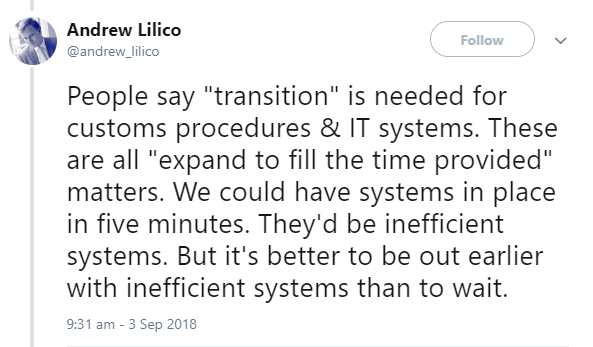
Around 15 years ago an MP stood up in Parliament and demanded to know why the new computer system for the Child Support Agency (CSA) was taking so long to be delivered.

The computer system was implementing the CSA’s ‘new rules’, which were being introduced to reduce the complexity of the calculation around how much the person paying the child support should pay. Under the new, simplified, scheme if you were paying support for one child then it would be 15% of your income, 20% if you were supporting two children and 25% for three or more children.

The MP – and I wish I could find a news story or a Hansard reference in order to name him – brandished a pocket calculator, such as you can buy for a couple of quid, and demanded to know why a sum that could be performed in seconds on a cheap calculator should be costing millions of pounds and taking years for an established IT consultancy firm to deliver in the form of a new computer system.

I remember it because, at the time, I was one of the many people working to deliver that computer system.

There are some complexities around the calculation itself; for example, the payment required couldn’t take the payee below the mandated level of protected income, but these were fairly trivial. Bigger issues revolved around actually determining a person’s income. For many of the CSA’s clients, working only in straightforward, pay-as-you-earn, employment, and those living on benefits, the calculation was, indeed, simple. Once you moved into the higher strata of society the problems multiplied. People went to enormous lengths to hide from the government how much money they had, solely in an effort to avoid paying for the upbringing of their own children. The CSA had specialist teams of people for dealing with self-employed absent parents, colloquially known as the ‘shoe-box team’, because of the frequency with which enquiries about how much a self-employed person earned were replied to with a shoe-box full of receipts and invoices, and a note reading, “You work it out”.

Above all of this the new system was a move away from the caseworker-centric model, where CSA employees had a stack of cases that were theirs, and towards more of a call-centre model. where if you needed a particular thing doing your work got somebody who could do that work, not just somebody who happened to be in arms-length of a filing cabinet with your paperwork in.

I could easily write 10,000 words about how complex that work-routing system was, because I was the person who designed it but, in brief, it had to understand things like the functional divisions within the agency, the regional divisions (sending a piece of legal work for someone living in Scotland to somebody used to working under English law would cause problems, for example), it had to understand there were times when people within the case couldn’t be made aware of who was dealing with it (if the case had been passed to the fraud team, say), it had to understand who could be trusted if a case about a premiership footballer, along with all of his contact and financial details, was flying around the system, it needed to understand that – while there’s no functional difference – there’s a material difference between dealing with somebody who wants to close her case because her and her partner have reconciled, and somebody who is closing her case because the child involved has died…

…but, more than anything else, the whole system needed to be able to withstand the unimaginable complexity of human life. The cases that you’d never dream existed – the man with 76 addresses, the man who was paying maintenance for his child, because he’d moved in with another woman, who was then claiming maintenance for her child, because she’d done a runner herself and left him holding the baby, the grandparents claiming against both parents, because they’d dumped the kids there one night for baby-sitting and then gone to start a new life.

That’s what takes the time. Not working out 15, 20 or 25% of an individual’s income, but spending hundreds of hours in meetings with people who knew what they wanted the system to do, or knew how the agency worked (rarely the same people), gaining the in-depth knowledge required to be able to explain it all to a computer algorithm.

Every large computer system is like this. Unless you’re an expert, or take the time to become an expert, then you have no idea how much work it will take. People in the forefront of political life are rarely experts, and never have the time to learn.

Don’t believe idiots waving calculators.

lilico

Questions

I have a question for supporters of Jeremy Corbyn. It’s quite a simple one, but there will be harder follow-up questions. Let’s start with the simple one…

Is Nigel Farage a racist?

I believe you’d struggle to find him saying something that’s overtly and unequivocally racist and, indeed, you’d find many example of him denying being a racist. There is, however, a certain amount of circumstantial evidence that he’s racist. Let’s just run through some of it and, just for fun, I’m going to slip on my devil’s advocate hat and argue that it proves nothing.

Farage sang Hitler-youth songs at school – This is a baseless smear, without a shred of evidence to support it.

He supported Tommy ‘Founder of the EDL’ Robinson – Nigel is a life-long supporter of free-speech and defended Mr Robinson on those grounds. It doesn’t mean he agrees with everything he says.

And he supports Donald Trump – So? The Queen’s met Donald Trump, does that mean she’s a racist as well?

Nigel-Farage-PoI-2
What’s gold and has two arseholes?

He spoke at a rally for a far-right political group in Germany – Nigel is a politician who believes in speaking to people right across the political spectrum, and he is saddened that narrow-minded people, interested only in speaking to their own echo-chamber, would use his willingness to engage others in debate against him.

How about the time he posed in front of that poster with all the migrants on – Nige only glanced at the poster before the shoot, and utterly condemns any racist connotations it might have (although the artist who created it said it’s not racist, so that’s OK)

We could do this all day, but are you convinced? Do you still think Farage is a racist? Yes? OK, it’s time for the difficult questions.

First of all, if you can spot this is all bluff when it’s applied to Nigel Farage, why the hell can’t you spot the same when it’s applied to Jeremy Corbyn? Why this huge gap in your political senses?

How about a hypothetical question; if you were black or a Muslim, living in Britain, and Farage was leading a political party polling within a few points either way of the government, and was pushing for a snap general election then how would you feel? Safe? Comfortable?

And suppose further that if you cast any doubt on those deflections that I just pulled out of my arse – perhaps said that Farage was well aware of what the poster said, and fully supported it, or that he spoke to a far-right rally because he’s fully aligned with their interests, or that he supports Trump because Trump represents the pinnacle of his aspiration – that if you voiced any of that on-line then hundreds of people would pile on you, throw racial stereotypes at you, insult you, accuse you of disloyalty to your country, tell you that if you didn’t support Farage it was because you wanted more Tory government, accused you of playing the race card…and if it was all approvingly shared by senior figures in Farage’s party, then how would you feel?

You know how you’d feel. You know how the people affected would feel. That’s why you’d do everything to stop Farage ever being in that position.

And yet, when it’s Corbyn, you time after time accept the weak deflections. You believe that case after case of being on the side of Antisemites can each be explained away on their own, and refuse to see them as part of a larger picture. You give Corbyn extraordinary leeway, that you’d (rightly) never afford Farage. Which means that the last question, for you to ask yourself, is the hardest one of all.

Why?

Does your head in

A little over two years ago I sat in the most depressing meeting of my life.

I was in the meeting because it was about the future of my son’s school and I was, at the time, the vice-chair of the board of governors. Let me be candid, I was massively unqualified for this position. I’d signed up as a governor because the school was failing – staff turnover was sky-high, pupil numbers were dropping, parents were complaining, the school – once a happy and friendly place – seemed to be under a hovering cloud of doom, and I wanted to know why.

Some things I learned very quickly:

  1. If you’ve never worked in education then there’s a tonne of stuff involved in running a school that you know absolutely nothing about.
  2. Failing schools haemorrhage governors, because when OFSTED finally rock up to the front door and see that the place is dead it’s you that they’re going to ask for an explanation.
  3. Every other factor aside, if you join the governing body of a school that’s already failing then you won’t understand what’s going on or why it’s going wrong. The people who do understand – the long-term governors and the senior-leadership team – will be the ones who caused the problems, and they’ll be leaving or trying to keep you in the dark.

I was proposed as chair in my first governors meeting, because nobody else wanted to do it. I managed to refuse, thank god, and held off for 6 months before accepting the vice-chair position.

Hence, a year after first becoming a governor, I was in the meeting I mentioned. Sat next to me was the new headteacher, not yet in post, that I’d recruited for the school. She was about to become the 5th head, acting-head or interim head that I’d worked with in my year as a governor.

We were meeting with someone very senior from the local authority, to try to get the school back on track. He listened to our problems; pupil numbers were falling, which meant the school’s budget was also falling. The budget had previously been catastrophically mismanaged, departing staff hadn’t been replaced, while tens of thousands of pounds sloshed around in funds earmarked for pointless projects. The staff who remained were at the lowest point possible, previous under-performance had been overlooked because they were friendly with the last full-time head, long-term sickness was through the roof. Good teaching had not been demanded, taught or rewarded, meaning that bad teaching dominated the school, although the data had been, without any subtlety, massaged to hide the worst of it. Parents were in open revolt against the school, the PTA had collapsed, if OFSTED had inspected us that day we’d have been in special measures.

We told all of this to the local authority, and they said there was nothing they could do. They suggested we might be best off closing the school.

They said this as I sat next to the woman I knew had handed in her notice from her current job and who had agreed, eyes wide open, to come and take on our school.

I don’t know how she didn’t break down and cry. I damn near did.

The meeting finished. Life rolled on. The local authority did nothing. Nothing. Our new head teacher assumed her post and worked tirelessly for two years to turn the school around.

No, “turn the school around” is too small a phrase. If she’d had to rebuild it herself, brick by brick, it would have been less work than she’s put in.

She’s energised the staff, brought the teaching standard up to outstanding, implemented visionary plans on a shoestring budget, calmed parents, made hard decisions when they needed to be made, ensured that the data are exemplary in their accuracy and has recognised and rectified the deficiencies, from years of poor teaching, that they showed.

And she’s made the school a happy place again. It rings with optimism. You can’t walk through it when the children are there and not find yourself smiling or laughing at something that’s going on. You can’t read through the children’s books, or look at the school photos on their Twitter account, and not feel the love and attention that every child gets.

She didn’t break down and cry in that meeting, the most depressing I’ve ever sat in. She shed a few tears when, about 4 months into her tenure, OFSTED did visit, and rated the school as ‘Requires Improvements’…and then admitted that if their visit had been just a couple of months later, had given her just a few more weeks, then the school would have been ‘good’.

I was sitting next to her then as well, and I fully understand her frustration at being so close, and yet undone by OFSTED’s arbitrary schedule.

Then she got back on with doing her job.

How do you reward someone like that? What price do you put on someone who can shape the view of learning and education for hundreds of children? Someone who can make educaton something that they want, not something to be endured. Children who’ve benefited from her hard work will go on to a hundred different careers, each and every one of them facilitated by somebody too strong to be broken by a meeting that would have broken me like a dry twig.

The vast majority of her children will grow up to be tax-payers in this country and if they’re lucky, if they’re very, very lucky, their taxes will be paying for somebody as good as her.

She won’t get a pay rise this year.

Budgets are tight. Some people really resent that their tax is spent on teachers…but if the children of those people came to our school they’d still be loved, and taught brilliantly, and would benefit from every advantage that our head could possibly give them, and would, hopefully, turn out to be the kind of people who understand the difference between price and value.

Three uncomfortable meetings with the president

Foreword (an apology)

I most often blog short comedy pieces or political musings (which, intentionally or otherwise, often end up being comical). Although I often think of stories I rarely bother to write them down. This short story is, then, a bit of a departure from my usual, but it was stuck in my head and the only way to get rid of it was to write it down.

Any feedback is gratefully appreciated (even if it is of the “Please don’t write any more stories” variety).
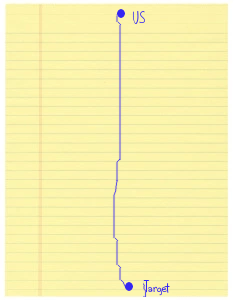
3 meetings diagram

Meeting 1.

Doctor Montgomery stopped speaking and stood watching the president. She glanced over to her team, who, as instructed, were also keeping quiet. They were undoubtedly the best team her budget would run to, and she was incredibly proud of the work she’d done with them, but getting them ready to speak in the oval office was beyond her skills.

It took the president a clear 30 seconds to notice that she’d gone silent and look up from his phone. He avoided meeting her eyes, held up his stumpy just-a-minute finger and returned to whatever he’d been typing. Eventually he put his phone down and slid it across his desk, and then sat forward in his chair, so that he could see its screen with just a flick of his eyes.

“It’s been really great listening to you,” he mumbled, insincerely, “Really, really, great, and I’ll think about what you said, I really will, but now I’ve got a meeting with Dr Monnygonny.”

“I’m Dr Monnygonny,” snapped Dr Montgomery, who hadn’t previously appreciated the president’s talent for helping people find the end of their tether.

“You are?”

“Yes! No! I’m Doctor Montgomery. Dr Selina Montgomery. Your meeting is with me, and has been for the last ten minutes!”

“That’s great. It’s really great that more women are becoming doctors. Even if they’re not hot, like the lady doctors on TV.”

Selina found herself lost for words, for the first time she could recall.

“Anyway. I feel fine. Really healthy. I’m probably the healthiest guy ever to sit in this office, so maybe you should run along and I’ll see what this Dr Montygonty guy has to say.”

“Sir, I am a doctor of physics. There is no doctor Monnygonny, or Montygonty, or Monnymonny or Montgomery…these are all MADE UP DOCTORS!”

She realised she was yelling and took a moment to compose herself while the president’s eyes darted back to his phone.

“Sir, I’m Doctor Selina Montgomery. I’m a doctor of physics and head of the LL project. As I was saying…”, she gestured back to her slide presentation.

“You’re the head of what, now?” asked the president.

“LL, Mr President. As I’ve explained, Limitless Logistics is the code-name for the top secret project that was started by Transport Facilitation Archive, which was, itself, set up to build on the work of the Pandimensional Research Agency, which was set up by then Vice-President Richard Nixon in 1962…”

“Nixon? That crooked liar. Is he involved in this?” interrupted the president.

“No, sir, he’s been dead more than 20 years. Limitless Logistics was set up by your predecessor who…”

“Yeah, well he made a lot of bad decisions, that guy. He just didn’t know how to make a good deal.”

Dr Montgomery ignored the implied insult and carried on, “…who felt that our work, though highly speculative, would be revolutionary.”

She used her remote control to skip backwards through the last 20 slides of her show.

“Our break-through came in 2010, when we first managed to make practical machines working on the theoretical principles developed by the TFA.”

Her slide-show flashed to what might have been the first hit in a stock image archive search for “scientists 1960s”

“Who are they?” asked the president.

“They’re the founding members of the TFA, sir. From left to right we have professor…”

“Who are the TFA?”

“Well, they are, sir. We have professor John…”

“No. No. I mean WHO are the TFA? Should I know what that stands for?”

“They’re the Transport Facilitation…”

Dr Montgomery stopped and changed her brain down several gears, ready for an uphill struggle.

“Let me give you the 2-minute version, Mr President.”

She walked around his desk and stood beside him, crouching slightly, feeling somewhat like a primary school teacher. She took his notepad from the desk and a pen from her pocket.

“Imagine this sheet of paper is our whole universe, and we’re here.”

She marked a dot halfway across the page, a finger’s width down from the top, and labelled it “Us”

“And imagine we want to go somewhere else.”

She put another dot in line, a similar distance up from the bottom of the page and wrote “Target” next to it.

“If we want to go from where we are to where we want to be, then we have to travel all of this distance.”

She drew a line the height of the page, connecting the two dots.

“Now, that might be a very long way, and it might take us a long time to travel there. But imagine we could do this…”

She loosely folded up the bottom of the page, so that the dot from the bottom of the page was overlaid on the one from the top.

“Now the two places are in the same place, and we can step between them, without travelling any distance at all.”

She let the paper unfold, and looked at the president, searching his face for any signs of understanding. He stared at the page for twenty seconds.

“So, the guy before me funded you to spend 10 years doing orgasmmi?”

“Origami, sir, but essentially, yes.”

“Well, thanks for coming in, Dr Mon…,” he mumbled the rest of the word, “This is going to be the easiest budget cut I ever made. Wait until I tell FOX that the democrats were spending tax dollars teaching people to fold paper. Tax and spend. It doesn’t even look like a swan.”

“WE’RE FOLDING THE GODDAMN UNIVERSE, YOU MORON!” yelled Dr Montgomery. She took a few deep breaths. “The piece of paper” she indicated to the notepad, still in front of the president, “Was a 2-dimensional universe, and we made a short-cut by folding it in 3-dimensional space. But we live in a 4-dimensional universe and can make a short-cut by folding it through the 5th dimension. That’s what the LL project has been working on for a decade.”

Again the president’s face showed no obvious signs that any of this had been meaningful to him.

“Please, sir, just watch this video.”

She quickly flicked through her remaining slides, until she reached one that included the familiar triangle of a ‘Play’ symbol.

The video that started playing showed a split screen. Each side showed a room, although it was possibly two views of the same room, as they looked identical. The walls were grubby white and featureless, other than a black and yellow ‘target’ symbol painted into the centre of each of them. The same symbol could also be seen in the middle of the floor. In the centre of the room on the left sat what looked like a large toy truck, with the bodywork removed and some random electronics added in its place.

After a couple of seconds, a hole opened in the wall opposite the camera in both rooms, showing identical rooms beyond. Another second later the toy truck, obviously remote-controlled, began to move forwards. As it approached the hole in the wall of the left-hand room it could be seen approaching through the hole in the right-hand room. It took maybe ten seconds to complete the journey to the centre-marking in the floor of the right-hand room, where it stopped. A heartbeat later the hole it had come through vanished. The video stopped.

Doctor Montgomery looked at the president, expectantly.

“You made a hole in wall…,” began the president, but she cut him off.

“The room on the left is in our test facility in Los Alamos, the one on the right in a similar facility, just outside Bismarck, North Dakota. In the time you saw, that truck – which has a top speed of 15mph –  travelled more than 1,000 miles, sir.”

There was a very long pause. Her team, who she had almost forgotten about, shifted uncomfortably.

“Can I watch the video again?” asked the president, at length. Selina clicked a button on the remote and the short film played again.

“I’m sure I don’t need to list the applications of this, sir,” she began, trying to gauge if she was going to need to do exactly that.

“I will give you a million dollars for the patent to this,” offered the president, looking her straight in the eyes for the first time.

“Mr President, this is a top-secret project, paid for by the United States government. I can’t sell you the patent.”

“Five million.”

“Sir, you don’t understand. The United States government owns this. It’s not mine to sell.”

“But you know how to make it work, and you have notes and what-not.”

“Yes, sir, but…”

“Ten million dollars. I’ll write you a check right now. I’ll even use my good-check book.”

“Sir, please…” began Doctor Montgomery, settling in for a lengthy discussion. Out of the corner of her eye she saw her team relax. Their work was done for the day.

Meeting 2

“I’m not kidding, this is going to make me a hundred billion dollars!” said the president, as the video concluded.

Silence filled the room, as the assembled staff turned to Steve, their chief, to see how this was going to play out.

“Maybe two hundred billion,” added the president.

Steve stepped up. “Are you sure you’ve considered all of the implications of this, sir?”

“Implications?” asked the president, “You mean opportunities? Vacations – bang! Business travel – bang! Maybe space travel – bang! I could be the first president on the moon. Or on Mars. People are going to love me if I do that.”

“What about the auto industry, sir?” asked Steve, quietly.

“That’s the terrific thing, Steve. No more need for autos. Clean air. Those libtards who prattle on about environments are going to have to admit that I’ve done more for the air – making it clean I mean – than any other president. Man, that’s going to burn them.”

“Yes, sir, they’ll certainly be singing your praises, but the 2 million US citizens with auto industry jobs might not be so happy.”

“There’ll be new jobs for them, Steve. Those jobs were probably going to go to Mexico anyway. Now they can be space miners. Out digging for platonium in the astrid belt. That’s a cooler job than bolting together cars, right? Let the lazy Mexicans build cars if they want to, nobody’s going to be buying them!”

“They might not want to be space-miners, sir. They might want to keep on doing the jobs that, you know, they’re trained for.”

“They could be colonising Mars. Look at NASA’s budget. We could give that to the space-miners if they go and colonise Mars? That would be terrific. Who wouldn’t want to do that?”

“I’m not sure that Ford’s senior management are…”

“And every time someone teleports to Mars another few bucks teleport into my pocket, Steve. Every journey in the world makes me some money!”

“Have you considered the effect on the oil industry of gas sales dropping to zero?”

The president seemed to give this some consideration.

“Those guys will be fine. They’ve got plenty stashed away.”

“Mr President! This isn’t just about the people who own the oil companies! What about everybody else?”

All eyes turned to the speaker, Tom, who was the most junior person in the room in both rank and age, but who now seemed to have found his stride.

“The whole world economy could collapse! Even if oil collapsing doesn’t do that then how do you run an economy when anybody anywhere in the world can teleport straight into any bank vault they like? And what about them military implications, General Flattenham?”

Flattenham, the head of the joint chiefs, who had been quietly doodling a bombing run in his blotter snapped his head up.

“Ah. Yes. Well, obviously lots of great applications for espionage and…and…so forth,” he offered.

“Espionage?” croaked Tom, “North Korea could teleport a nuke straight into the Pentagon! China could march a million men straight into the heart of DC! Five guys in a cave in Pakistan could send a dirty bomb straight from there to Times Square on New Year’s Eve, like this!”

He snapped his fingers.

“Obviously we’d need time to analyse these options,” stalled the general.

“Are you saying I should invade Pakistan?” asked the President, “Get them before they get us? Those marines are terrific. They could find those five guys.”

“We can have options for you on that scenario within the hour, sir,” chipped in Flattenham, keen to help out.

“Actually, sir, this technology could present insurmountable issues for the service as well,” chimed in Colon Flick, head of the president’s security detail, who was invariably referred to as ‘Con Flicted’

“Issues?” queried the president.

“Yes, sir, issues.”

“What sort of issues?” asked the president, impatiently.

“Insurmountable ones, sir.”

Steve headed off the impasse. “I think the president is asking about the nature of these issue, Con.”

“Ah, yessir. We cannot rule out the possibility that an assailant would use the trans-dimensional travel device to immediately deliver themselves into the vicinity of the prime protectorate, within any security perimeter operated by the service, and deliver an undesirable outcome.”

“Could you, perhaps, be a little more concise?” sighed Steve, who had long since learned that the president rarely heard more than the first ten words in a sentence.

“Somebody could teleport next to the president and shoot him, sir.”

A long pause settled on the room.

“Maybe I should speak to the great guys at the NRA,” suggested the president, “Ask them what we can work out.”

“ARE YOU ALL CRAZY?” yelled Tom, “THIS DOESN’T EVEN NEED TO BE ABOUT GUNS OR BOMBS!”

Everyone standing in the room took a step backwards, even the president shuffled his chair back. Tom noticed and calmed himself a little.

“A suicide bomber – and, lord knows, we’re not short of them – in any major city in the world could open a portal to the heart of the sun. Or to the vacuum of space. Or to a black hole. And, boom, one city less.”

“But there’ll be good guys with a portal to the sun too, right?”

“IT DOESN’T MATTER WHO’S GOT THE PORTAL TO THE SUN, YOU MORO…,” Tom stopped himself short, as everyone in the room looked at him, open mouthed. Everyone except the president, who had asked the question and then picked up his phone.

“It does seem,” said Flattenham, “that the military advantages of this technology would be best served by only us having access to it.”

Steve nodded in agreement, “We can’t put this genie back in the bottle, but if we can keep it absolutely secret then it could give us an enormous tactical advantage.”

“The espionage possibilities alone. Wow!” added Con.

“While the Russians, the Chinese and the French don’t know we’ve got this we can run rings around them,” enthused Flattenham, warming to the subject.

The president’s phone began binging, so quickly that the notification noises overlapped and cancelled each other out. Steve removed his glasses and pinched the bridge of his nose.

“Mr President, you haven’t by any chance just tweeted about the subject of this meeting, have you?”

“The American people have a right to know how rich I’m going to be, Steve,” replied the president, not looking up from scrolling through his notifications.

Steve shot a glance at the president then, as if musing to himself, pondered, “I wonder how this is going to affect property prices.”

The president looked up from his phone.

“I mean,” continued Steve, “Who’s going to rent an apartment in New York, if they can instantly commute to Manhattan from Bumwad, Idaho?”

The president slid his phone out of his own reach and leaned forward in his chair.

“I bet it’s going to have a big impact on the hotel trade as well,” Tom chimed in, “Why stay overnight anywhere, when you can be anywhere in the world a second after you leave home?”

Steve gave a slight nod of his head, to signal to Tom his approval at how fast he’d picked up the stratagem, while also making a mental note that Tom was clearly bright enough to raise questions about how he’d got a place in this administration. None of the possible answers suggested that he wasn’t someone to keep a close and careful eye on. Meanwhile the blood draining was from the president’s face.

“I guess there’s no much point building that border wall, either,” added Tom, “In fact, borders of all kind become pretty much obsolete. It really does become a small world.”

“Hang on, kid,” said the president, angrily, rising to his feet, “The great people of America didn’t vote for me to remove all borders. They want their wall. It’s going to be a terrific wall, and it will work.”

“But if we need to tell them how rich you’re going to be, sir,” teased Steve sadistically.

“Maybe I won’t tweet for a while,” conceded the president. Then, pressing his intercom button, “Get me clean-up-Kelly!”

“I’m not even sure you can buy the rights to technology developed by the military budget,” mused the general, before the others sushed him into silence.

Meeting 3

When Steve entered the oval office the president was asleep. He hadn’t simply leaned back in his chair and closed his eyes, he’d gone for a full, face-first, slump on his desk, using one of his arms as a pillow. He was snoring at quite some volume.

The junior treasury agent, who was seated opposite the president, turned and gave Steve a panicked look. Steve nodded and jerked his head towards the door. The agent leapt up and headed in that direction.

“Come back in an hour, we’ll fit in your briefing then,” whispered Steve as the agent passed him.

Steve positioned himself in front of the president’s desk.

“Mr President, Israel has launched a nuclear attack on Lichtenstein,” he announced.

The snoring stopped for a few seconds, to be replaced by mouth-smacking, and then resumed.

“Mr President, Panama has invaded Texas and is holding the vice-president hostage”

“Muh, wha? Co’ ba’ la-er”

“Mr President, CNN is reporting that there were only 5,000 people at your inauguration.”

“WHAT!” yelled the president, on his feet and already pointing the remote at the TV.

“Welcome back, sir,” said Steve, who was constantly delighted that his high-profile job had not, as he’d feared, stopped him torturing dumb creatures, but instead actively presented many daily opportunities for him to do so. He moved over the TV and turned it off.

“I have good news and bad news, sir. The good news is that the matters we discussed in Tuesday’s meeting are resolved.”

“Tuesday? Was that the meeting where we ordered pizza?”

“No, sir, that was this morning’s prayer breakfast.”

The president thought about this momentarily and then laughed.

“Ha, that’s right. Those Muslim guys sure didn’t appreciate the sausage pizza, did they? I really showed them.”

“You certainly did, sir,” conceded Steve, and then added, “Although, technically, they were Buddhists.”

“Muslim, Buddhist, what’s the difference?” asked the president, waving his hand dismissively, “They don’t share our proper Christian values, and that makes them savages. What was Tuesday’s meeting?”

“The one where we discussed the technology you were stealing from the government, to make yourself the richest man on the planet, while causing hardship to millions, Mr President.”

“Can you narrow it down at all?”

“The meeting about the teleporter technology sir. That meeting.”

“We’ve sorted the issues? That’s great. I was just worrying about those issues when you came in. This is terrific news, the best news. America is going to be really great. I’m going to rule the world.”

“Yes, sir,” said Steve, suppressing a smile, “That’s the bad news.”

The president looked at him, still rubbing his hands together.

“It turns out,” continued Steve, “That there is no Doctor Selina Montgomery, or a Limitless Logistics project, or anything else she claimed. She appears to have been an impostor who gained access to the White House fraudulently.”

“WHAT?” yelled the president, “This is supposed to be most secure place in the country! Which idiot let this happen?”

“Well, we’re still investigating, sir, and while I’m confident that we will pinpoint the culprit, or culprits, who failed to properly check her story, but I think we’re going to have to admit that some of the recent hiring decisions you’ve made personally have been people who are sub-optimal for their roles.”

“You’re trying to pin this on me, Steve? I’m one of the world’s greatest businessmen. I never make a bad decision. Name me one thing wrong with any of my hiring decision!”

“Well, sir, does the phrase ‘Hire that blonde with the great rack’ ring any bells?”

“Who am I supposed to have said that about?”

“Well your diary secretary, for a start.”

“She’s right outside the door!” protested the president, “You can’t expect me to look at somebody ugly all day!”

“Also, several members of the security staff, two members of cabinet, the head of the NSA…”

“Hey! She was really keen on the second amendment! These are all good hires. People at the top of their game.”

The door suddenly opened and Titzi, the diary secretary, ran in. She looked at the two men in surprise and then did a quick scan of the room.

“Sorry, Mister Prescient, I forgot this wasn’t the bathroom.”

She turned and ran out, leaving the door open behind her. The president groaned and turned to look out of the window, into the garden.

“She’s getting better, sir. At least we don’t have to have the chaise lounge cleaned this time.”

The president let out a long and mournful sigh.

“So, there’s not going to be any teleportation, then?” he asked.

“No, sir, I’m afraid not.”

“OK. You can go now Steve.”

Steve waited just long enough to watch the president sink his head into his hands and then headed out, through the outer-office. He had just reached the far door of that room when he heard yelled from the oval.

“WAIT! SHE MUST BE REAL! SHE CASHED MY CHECK!”

— The End —

Playing the wrong-game

There have been some complaints that Labour’s Brexit policy is unclear. This is, of course, nonsense – Labour have a perfectly transparent Brexit policy and, like so many Brexit plans, it’s a ‘have your cake an eat it’ plan.

Labour’s plan is beautifully simply; they want the Tories to go right ahead and make a pigs-ear of Brexit then, in the aftermath, blame them for the economic and structural chaos that it brings. There will be claims that Labour’s ‘Job’s first’ Brexit would have been brilliant for the country. There’s no need, of course, for there ever to be a fully-developed plan for the Job’s First Brexit. It’s only role is to be a political what-you-could-have-won, the road untaken option that was better, in every way, than what you actually got.

The current Labour leadership hopes to inherit a broken country, outwith the EU, crying out for radical reform, so that they can play at being 1945 Attlee.

The only real issue with this plan is that it is horribly cynical and Labour know it will cause hardship, especially for the low-waged. This is why the ‘eating it’ part of their plan involves convincing the majority of their voters that it’s not their plan at all.

This is the function of the ‘long-game’ myth; continue to march towards a hard-leave, all the while telling the majority of Labour voters that there’s a secret strategy to swerve aside at the last minute.

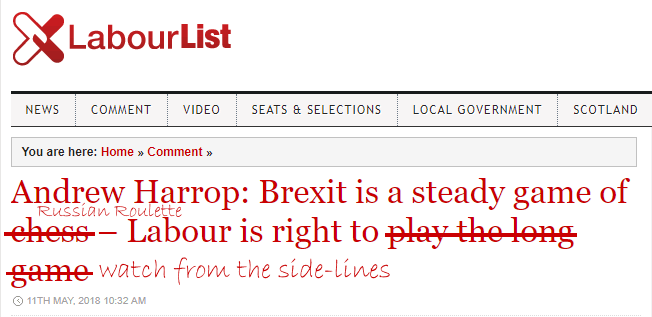
Hence articles like this terrible dross, claiming that this is all some brilliantly planned chess strategy. It’s not chess, of course, it’s Chicken, and it’s Chicken where the opponent you claim will swerve aside first is the brick wall of leaving the EU in 10 months.

labour list headline
Fixed that for you

There isn’t time for a long-game, especially when it’s as ill-defined as “Wait for the polls to change and then strike”.

Labour remainers should be disgusted that they are being lied to this way and being told, bluntly, that their votes are less important to the party than those of former UKIP voters, which they hope to woo back.

Leavers should be disgusted that Labour either wants to leave, but can’t make a case for it, or wants to remain, but is scared to say so, and is banking on the economic punishment of those who supported Leave to change their minds.

And everybody who considers voting Labour should be disgusted that a party that says it wants to lead the country through radical reforms is so lacking in the ability to lead that it’s happy to meekly follow the polls.

Unheld

Every school day I do the run for my 8-year-old son. It’s an arrangement that suits us well, as we both like our rituals. The order in which things are done is invariable; wake-up, cereal, getting dressed, shoes and coat, collecting bags, out to car, drive to school, he unloads onto me any bags he can as he gets out of the car, I hold out my hand to him…

It’s a ritual that will change soon. In less than 2 weeks he will be 9. In September he’ll make the step up to middle-school. We’re approaching the age where even being seen with your dad is a source of eternal embarrassment, holding his hand in public would be unthinkable.

…so, for the present, I find joy in the mornings where he takes my hand (more often than not, still). It’s symbolic; there are no roads to cross, the one we walk alongside isn’t busy. One of these mornings, one soon, I will hold his small hand in mine for the last time. It’s an insignificant thing, and the tragic Alfie Evans case reminds me how lucky I am, but it’s still going to be an ending.

Another ending is coming sooner. As I type this I have a 17-year-old daughter, but by the time you read it she will no longer be 17. May 1st is her 18th birthday, she (and around 1,800 others) will be joining the adult world.

How I wish that we who’ve been adults for a while had furnished her with a better world to step into. It’s not just the rush, here and in the US, towards political extremes, or her inheriting the consequences of a vote that she couldn’t take part in, it’s also about the terrifying view of the world that social media gives us. Where we can see, daily, that so many men are not just a bit sexist, or disrespectful of women, but actually straight-up hate them.

My daughter is intelligent, diligent, funny and brimming with the common sense that, sadly, skips the male side of my family. I know she will make the best of the new world of adult responsibility she now finds herself in…but…even so, it’s hard not to want those years back where getting her to school, picking her up at the end of the day, patching the occasional grazed knee was all it took to know she was safe. Just a few more years of that, perhaps. Just to see how things turn out.

Time has caught up with me. The clock points to midnight. It’s a new day. My child is no longer a child.

With no little worry and reluctance, I let go of her hand.

Give me a name

Give me a name!

Over the past three years I’ve been given many; “Tory”, “centrist dad”, “traitor”…and other, less repeatable, ones.

Because I won’t support Corbyn.

Call me what you like…

I’m a husband to an NHS midwife. I see, every week, the stress she is put under by short-staffing, lack of beds and matters such as under-resourced agencies trying to keep the babies of paedophiles and violent offenders safe.

I’m a school governor for a first school. I spend hours of my life balancing budgets and allocating ever-scarcer resources. I know how precious those young lives are, and how many of their parents are finding it harder to make ends meet.

I’m a father to a 17-year-old daughter, who’s heading off to university in September. I would dearly love to her to be able to come out of the experience without a life-time of debt in front of her.

I’m a boss to a team who are predominately young graduates. I see how hard it is for them to get on the property ladder, to even forge a decent career path.

I want all of those things, and more, to change, but the price for that can’t be putting someone who has a 35-year history of associating with the worst elements of the left – the enemies of democracy, the apologists for tyranny, the terrorists, the Antisemites, the homophobes, the bullies and the misogynists – into power.

Call me what you like, I won’t vote for him.

But we want the same things. Lots of other people want them. Other politicians want them. Politicians who don’t have this hideous baggage attached to their name. I don’t need somebody perfect – because politicians are human, and humans make mistakes – but I can’t support somebody who makes the same mistakes over and over again, and then hides from the consequences and the accusations.

Give me a name I can vote for. Give me a name I can be proud to support. Give me a name that I can put my cross next to, knowing that they will genuinely try to make things better for everybody.

Give me a name!